.png)
.png)
.png)


Last Updated:
June 6, 2026
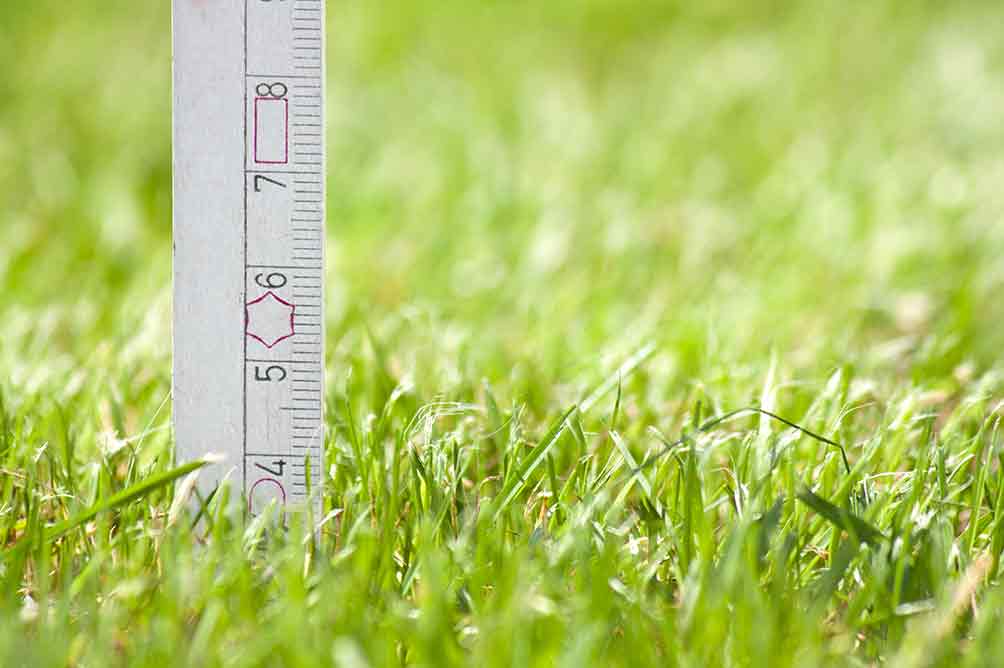
In Washington's climate, where cool-season grasses dominate residential landscapes, excessively short mowing can weaken turf, expose soil to environmental stress, and create opportunities for weeds to invade.
Lawns throughout Washington perform best when maintained between 2.5 and 4 inches tall, and most lawns in the region should never be mowed lower than this range. Grass blades act like solar panels, collecting sunlight and producing the energy needed for root development and recovery. When too much leaf tissue is removed, the plant must divert resources toward regrowing blades instead of strengthening roots. Keep reading for more on proper lawn mowing in Washington!
Tall fescue has become one of the most widely used lawn grasses in Washington because of its ability to tolerate both wet winters and dry summer conditions. This grass naturally develops an extensive root system, but only when enough leaf surface remains to support growth.
Mowing tall fescue below approximately 3 inches can place unnecessary stress on the plant, especially during warm summer weather. Scalping the lawn often results in slower recovery, thinner turf, and increased water requirements.
Maintaining taller mowing heights helps tall fescue:
Kentucky bluegrass is appreciated for its rich green color and ability to spread into damaged areas through underground stems. Although it can tolerate slightly shorter mowing than some other cool-season grasses, it still suffers when consistently cut too low.
For most Washington lawns, Kentucky bluegrass performs best between 2.5 and 3.5 inches. Lower mowing heights can reduce the grass's ability to store energy and increase susceptibility to disease and summer stress.
Keeping Kentucky bluegrass at an appropriate height allows it to:
Fine fescues are commonly found in shaded areas throughout Washington landscapes. These grasses are known for their delicate texture and ability to thrive where sunlight is limited.
Because fine fescues grow more slowly than many other turf species, aggressive mowing can quickly thin the lawn. In most situations, maintaining a height between 3 and 4 inches produces the best results.
Allowing fine fescue to remain slightly taller helps:
Perennial ryegrass is frequently included in Washington lawn seed blends because of its rapid germination and attractive color. While it establishes quickly, it generally has a shallower root system than tall fescue.
Mowing ryegrass too short can leave it vulnerable to heat stress during Washington's drier summer months. Most lawns containing perennial ryegrass benefit from a mowing height between 2.5 and 3 inches.
Proper mowing practices help perennial ryegrass:
Scalping occurs when a mower removes too much of the grass blade at one time, exposing stems and soil. This often happens when mowing heights are set too low or when overgrown grass is cut back aggressively.
In Washington, scalping can create a variety of lawn issues. Exposed soil dries out faster during summer, weed seeds receive more sunlight, and grass plants must expend significant energy replacing lost foliage. Repeated scalping weakens the turf over time and can leave bare spots that require overseeding.
Signs that a lawn may be mowed too short include:
Many lawn care professionals recommend raising mower decks during the warmest months of the year. Although Washington generally experiences milder summers than many parts of the country, grass still benefits from additional protection during periods of heat and limited rainfall.
A slightly taller lawn creates natural shade over the soil surface, helping conserve moisture and moderate root temperatures. This can reduce stress and improve overall turf performance throughout summer.
One of the simplest ways to avoid mowing too short is following the one-third rule. This guideline recommends never removing more than one-third of the grass blade during a single mowing session.
For example, if a lawn is maintained at 3 inches, it should be mowed before it exceeds approximately 4.5 inches in height. Removing excessive growth all at once shocks the grass and slows recovery. Consistent mowing at the proper interval helps maintain a healthier, more attractive lawn throughout the year.
Q: How short is too short for most Washington lawns?
A: For the cool-season grasses commonly grown in Washington, mowing below 2 inches is generally considered too short. Most lawns perform better when maintained between 2.5 and 4 inches.
Q: Why does my lawn turn brown after mowing?
A: Brown patches often indicate scalping. The mower may be cutting into stems rather than just removing leaf tissue, exposing lower portions of the plant.
Q: Can mowing too short cause weeds?
A: Yes. Short grass provides less shade at the soil surface, allowing weed seeds to receive more sunlight and germinate more easily.
Q: Is it okay to mow lower during spring?
A: Slightly lower mowing may be appropriate during periods of vigorous spring growth, but grass should still remain within its recommended height range.
Q: Does taller grass attract more pests?
A: Properly maintained grass at recommended heights generally does not increase pest activity. In fact, healthier turf often experiences fewer stress-related pest problems.
Q: How often should I mow my lawn in Washington?
A: Growth rates vary throughout the year, but most lawns require mowing every 5 to 10 days during active growing periods. The best schedule is determined by grass growth rather than the calendar.